product

Categories  A hub for news, updates, situations, analysis, testing, and useful insights, as well as a platform for sharing product information.product_EN

ผ้าเบรกรถยนต์

When to Replace Your Car’s Brake Pads ?

For every car, the brake system is essential and needs proper maintenance, just like any other part. It has the crucial job of slowing down or stopping the vehicle safely. One part that owners can check themselves is the brake pads, which wear out over time and use. Let’s first get acquainted with the car’s brake system. Currently, the most widely used types are disc brakes and drum brakes. Disc brakes are a brake system found in almost every car brand. Whether a car has disc brakes on only the front wheels or all four wheels depends on the manufacturer. Disc brakes consist of brake discs, calipers, and brake pads. In terms of how they work, every time we press the brake pedal, hydraulic fluid in the caliper pushes the brake pads against the brake discs, creating friction. This friction helps slow down the vehicle and stop it safely. Drum brakes  on the other hand, are a closed brake system used in cars and other vehicles, primarily in the past but still found in some vehicles today. Drum brakes comprise curved brake shoes, a brake drum, springs, and a piston connected to the brake line. The way drum brakes work is that when we apply the brakes, the inner brake shoes are pushed against the inside surface of the brake drum, which is attached to the wheel. This creates friction, slowing down the vehicle and ultimately bringing it to a stop Signs of Worn Brake Pads As mentioned earlier, brake pads are wear-and-tear components that drivers can observe themselves. When you encounter the following symptoms, it indicates that your brake pads may be close to wearing out: Reduced braking power, meaning you need to press the brake pedal deeper than usual, and your car slows down or stops more slowly than before. Every time you park, you find yourself having to engage the parking brake higher than usual (in the case of rear-wheel brake pads). The parking brake light on your dashboard appears even when you haven’t engaged the parking brake. This can happen because the brake fluid in the reservoir is below the MIN mark due to thinner brake pads. You hear a scraping sound, like metal rubbing against metal, every time you apply the brakes. In each set of brake pads, there is a warning metal tab that rubs against the brake disc to indicate that the brake pads are wearing thin. When should you change your brake pads? While brake pad manufacturers typically state that brake pads have a lifespan of around 40,000 to 100,000 kilometers, this can be true in ideal conditions. However, several factors can affect how long your brake pads actually last. These factors include how often you drive, your driving style, whether you drive at high or low speeds, and the terrain you typically encounter, such as hilly or steep areas. This means that the lifespan of brake pads can vary from one vehicle to another. It’s essential to regularly monitor and inspect your brake pads, especially because disc brake pads tend to wear out faster than drum brake pads, which have a longer lifespan. Brembo brake pads are well-known for their high-quality performance. They consistently deliver excellent braking performance, handle heat exceptionally well, and provide reliable stopping power. Brembo offers a wide range of brake pads designed for everyday driving convenience as well as high-performance brake pads for competitive racing. Every Brembo product undergoes continuous development, incorporating feedback from customers and the rigors of global racing competitions to ensure ongoing product improvement. Why choose Brembo brake pads? Exceptional braking feel. Resistance to brake fade. Friendly to brake discs, preventing premature wear. Excellent usability and feel. Endurance in various weather conditions and temperatures up to 400°C. Suitable for high-speed driving. Proven in MotoGP and WorldSBK, with technology tested on the racetrack now available to users. Thanks to valuable information from www.car.kapook.com and Brembo Thailand. Drivers looking to change their brake pads should research the details and choose a service from a reputable garage or shop. If you need additional information about brake systems or Brembo products, feel free to contact G.P. Auto Parts. ___________________________________ Place an order/Become a distributor. ACDelco Thailand By G.P.Auto Parts INBOX : Line id : @gpautoparts or Link Contact : Service Monday to Saturday from 08:30 AM to 05:30 PM. 02-941-1222,090-626-8964  
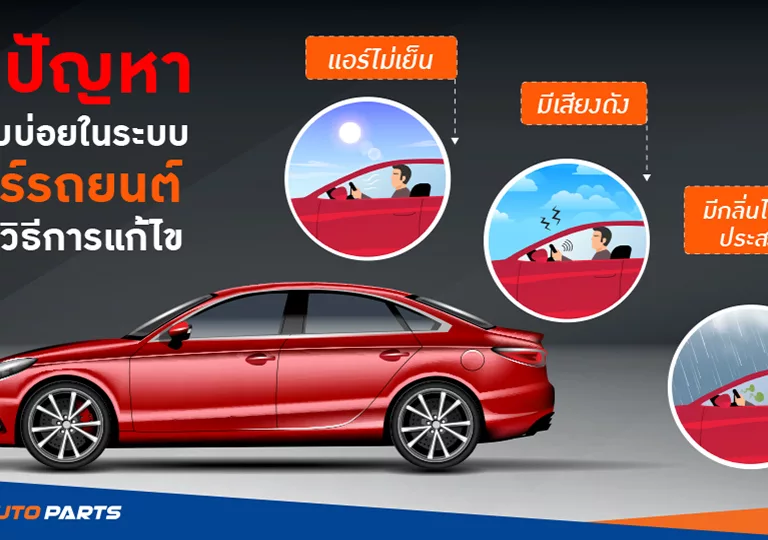
3 ปัญหาที่พบบ่อยในระบบแอร์รถยนต์ 960x540 1 jpg

3 Common Problems in Car Air Conditioning Systems

How to Fix Them The air conditioning system, commonly referred to as the ‘AC system,’ is an integral component found in every type of car. It plays a crucial role in the comfort of passengers within the vehicle. Primarily, the AC system regulates temperature, humidity, airspeed, and air cleanliness, ensuring a comfortable interior environment for passengers. The AC system consists of various essential components, including: Compressor Condenser Expansion valve Evaporator The operation of the air conditioning system involves a refrigerant, which exists in a gaseous state within the system. This refrigerant serves as the medium for exchanging heat within the AC system, allowing it to regulate the interior temperature of the passenger cabin according to passenger preferences. As a car is used over an extended period, whether it’s for 5 or 10 years, the AC system may gradually deteriorate or experience wear and tear due to its usage lifespan. Therefore, it becomes necessary to perform proper maintenance and repairs. 3 Common Issues in Car Air Conditioning Systems and How to Fix Them Air Not Cold Cause: Inadequate refrigerant or equipment leakage. Solution: Check for leaks and replace faulty components immediately. Intermittently Cold Air Cause: Accumulated moisture causing the expansion valve to freeze. Solution: Replace the expansion valve, receiver dryer, and flush the system. Delayed Cooling Cause: Compressor failure resulting in insufficient compression. Solution: Replace the compressor, expansion valve, and receiver dryer, then flush the system. Weak Cooling Cause: Overly pressurized system due to excess refrigerant or poor heat dissipation from condenser. Solution: Inspect the radiator fan, check for condenser blockage, verify refrigerant levels, and examine the pressure switch. Address issues as needed. Warm Air at the Evaporator Exit Cause: Frozen evaporator exit pipe reaching the compressor or excessive expansion valve opening. Solution: Quickly release refrigerant to remove excess, and examine the valve. If it’s a blockage issue, replace the expansion valve and flush the system.”      2. Loud Noise Sound Coming from the Passenger Compartment Air Conditioning System Cause: This sound often originates from the air conditioning blower motor, which is responsible for blowing cold air from the air vents, or from the valve that injects refrigerant. Solution: Adjust the air conditioner settings or fan speed. Observe if the sound level changes. If the sound becomes quieter or different, it suggests that there may be an issue with the blower motor, which may need to be replaced. Sound Originating from the Engine Compartment Cause: To determine whether the issue is related to the engine or the air conditioning system, you can turn the car’s air conditioner on and off. If there is no sound when the air conditioner is turned off, it indicates a problem with the air conditioner compressor. Solution: Check if the air conditioner compressor is making unusual noises and if it can be repaired. If repairs are not possible, you may need to replace the compressor with a new one.      3. Unpleasant Odor Accumulated Food Residues or Sweat Cause: The accumulation of food residues or sweat in the car can lead to unpleasant odors. Solution: Regularly clean the car by removing unrelated food items and cleaning the interior surfaces consistently. Fungi and Bacteria Cause: Accumulated moisture or humidity in the evaporator coil can lead to fungal growth. Solution: Perform regular cleaning of the air conditioning system using antibacterial cleaning agents. Also, inspect the cooling unit for any potential leaks that may cause fungal growth. Air Filter Damaged or Deteriorated Cause: A damaged or deteriorated air filter may accumulate mold and cause unpleasant odors when the air conditioner is in use. Solution: Replace the air filter with the appropriate model for your car. It is recommended to change the air filter every year or approximately every 20,000 kilometers, or more frequently depending on driving conditions and usage. For example, if driving on dusty roads, the air filter may become dirty faster and need replacement sooner than usual. Special thanks for the technical expertise and knowledge from Denso Car Service Partner. If your car’s air conditioning system has issues, it is advisable to contact a garage or service center for professional assistance in troubleshooting and resolving the problems. Additionally, don’t forget to choose high-quality and reliable products. Denso is another brand that G.P.Auto Parts trusts when it comes to quality and standards. If you are interested, you can reach out to us for more information. ___________________________________ Place an order/Become a distributor. GP MOBILITY PUBLIC COMPANY LIMITED Line id: @gpautoparts or Link Contact: https://www.gpmobility.co.th/en/contact-us-2/ Follow me: https://linktr.ee/gpmobility Service Monday to Saturday from 08:30 AM to 05:30 PM. 02-941-1222 (Auto),02-579-2882

อะไหล่และอุปกรณ์ เสริมความปลอดภัยช่วงหน้าฝน 960x540

Accessories Enhancing Safety for the Rainy Season

Driving During the Rainy Season: Increased Risk and Essential Car Parts and Accessories. Driving during the rainy season poses a higher risk of accidents due to slippery roads and reduced visibility. Extra caution is necessary. Additionally, having the right car parts and accessories is crucial. Today, G.P. Autoparts recommends parts and accessories that enhance safety during the rainy season to prepare for this year’s rainy season. Car Tires: Car tires play a crucial role in preventing hydroplaning and accidents by efficiently channeling water away. Therefore, the tire tread depth should not be less than 3 millimeters. It’s essential to replace your car tires promptly if the tread depth is inadequate. Avoid over-inflating or under-inflating your tires. Keep them at the recommended pressure, typically around 1-2 pounds per square inch (PSI) above the manufacturer’s specifications. This helps the tire tread expand, improving water displacement. Spare Light Bulbs: Always carry spare light bulbs in your car, with at least 1-2 bulbs available. Adequate lighting is crucial, especially during nighttime driving and reduced visibility due to rain. If a light bulb suddenly burns out, having spares can help prevent accidents.”      3. Windshield Wipers: Windshield wipers are essential during the rainy season as they significantly improve visibility while driving in the rain. Typically, windshield wipers should be replaced every year, or more frequently if they show signs of wear, streaking, or making noise. Battery Jumper Cables: Every car should have battery jumper cables on board. Drivers who spend extended periods behind the wheel may encounter starting issues due to various reasons, such as leaving headlights on or a weakened battery. Having jumper cables allows you to receive assistance from another vehicle, ensuring you can continue your journey. Emergency Warning Triangle: Carrying an emergency warning triangle is crucial for emergencies. In case of a breakdown or accident, an emergency triangle can help prevent further accidents by making your vehicle more visible, especially at night. Flashlight: A flashlight is a useful tool for nighttime travel. It can be handy for individuals who like to carry equipment or items inside their cars. A flashlight improves visibility, and in the event of a breakdown, it can be used to signal for assistance. We hope that the automotive parts and safety accessories introduced by G.P.Autoparts for the upcoming rainy season will provide you with greater peace of mind during your travels. However, please remember to thoroughly inspect your vehicle before embarking on your journey. ___________________________________ Place an order/Become a distributor.  G.P.Auto Parts INBOX : Line id : @gpautoparts or Link Contact : Service Monday to Saturday from 08:30 AM to 05:30 PM.  02-941-1222,090-626-8964
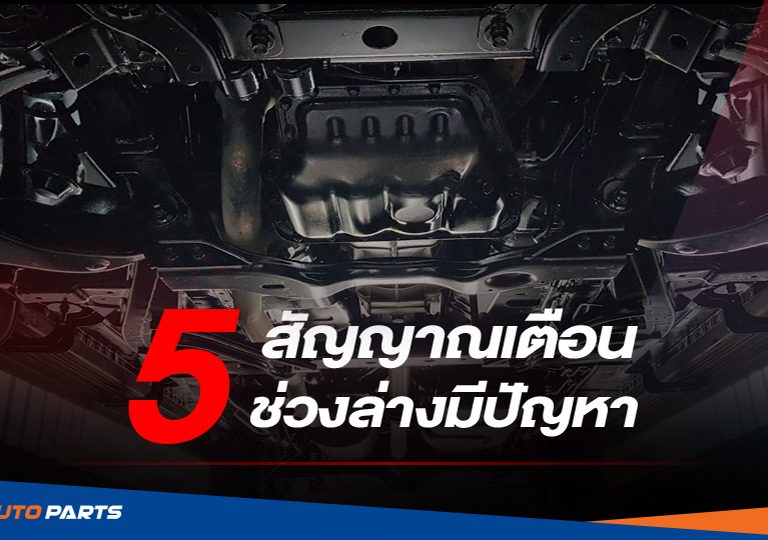
5 สัญญาณเตือน ช่วงล่างมีปัญหา GP 960x540 1 1

5 warning signs indicate problems with the lower range

Indicators signal when there is a problem with the lower range A car consists of many interconnected components, each with its own importance and function. The lower range of a car, in particular, plays a vital role in controlling the vehicle’s behavior. It’s essential to consistently observe and check the lower range of the car to ensure it’s always ready for use. There are various signs of abnormalities in the lower range, especially with increased usage. Cars that frequently encounter water or mud may exhibit unusual responses from the lower range. Drivers may notice constant bouncing or instability while driving, indicating potential issues with the springs or shock absorbers. Promptly addressing these issues ensures safe driving and helps save on repair costs. So, what are the signs of trouble? Signs like constant bouncing or instability while driving could indicate issues with the springs or shock absorbers. It’s advisable to have a mechanic inspect the car to ensure safety. Similarly, if the car vibrates unusually or shakes during driving, it might be due to wheel imbalance. This can be rectified by wheel balancing, ensuring smooth and stable driving. If there are loud noises or strange sounds while driving or turning, it’s crucial to have the car checked immediately. Ignoring abnormal sounds can lead to accidents, especially at high speeds. Additionally, if the steering wheel vibrates or shakes when braking, it could indicate issues with the brake discs. This can be fixed by resurfacing the discs, which is a relatively inexpensive repair compared to replacing them Symptoms of car’s lower range problems 1. Grinding noise under the front of the car: If you hear a grinding noise from under the front of the car when turning or driving over bumps or potholes, it could be due to worn out ball joints, tie rod ends, or sway bar links. If the rubber boots on these components have been missing for a while, and you hear a grinding or knocking sound, it’s likely coming from these parts. 2. Noticeable when driving over speed bumps: If you hear a clunking noise under the car when driving over bumps or rough roads, or even small hills, it could be a sign of a problem with the birdcage bushings. 3. Brakes make noise: When you apply the brakes, you may hear a loud “squeal” or “screech” sound, like metal rubbing against metal. This is usually a warning that the brake pads are very low, indicating the need for brake pad replacement. 4. Grinding noise while braking: If you hear a grinding noise while braking, it could be due to brake pads and rotors being contaminated by dust from the brake pads themselves. However, if you’ve been driving through a lot of water, don’t worry too much, as wet brake pads can make noise. If the noise goes away after driving for a while, it should be fine. 5. Loud noise when turning or at full lock: Mostly found in pickup trucks, this could be due to worn-out steering rack bushings causing metal-on-metal rubbing of the lower range. Steering rack bushings are inexpensive, and replacing them is relatively easy. If you notice this problem, it’s better to replace them gradually than to tolerate the annoying metal-on-metal sound. Thanks for the helpful information from www.krungsriauto.com ___________________________________ Place an order/Become a distributor. GP MOBILITY PUBLIC COMPANY LIMITED Line id: @gpautoparts or Link Contact: https://www.gpmobility.co.th/en/contact-us-2/ Follow me: https://linktr.ee/gpmobility Service Monday to Saturday from 08:30 AM to 05:30 PM. 02-941-1222 (Auto),02-579-2882