ISUZU.e

TAG – A hub for news, updates, situations, analysis, testing, and useful insights, as well as a platform for sharing product information.

Understanding and Dealing with the Silent Danger of PM 2.5

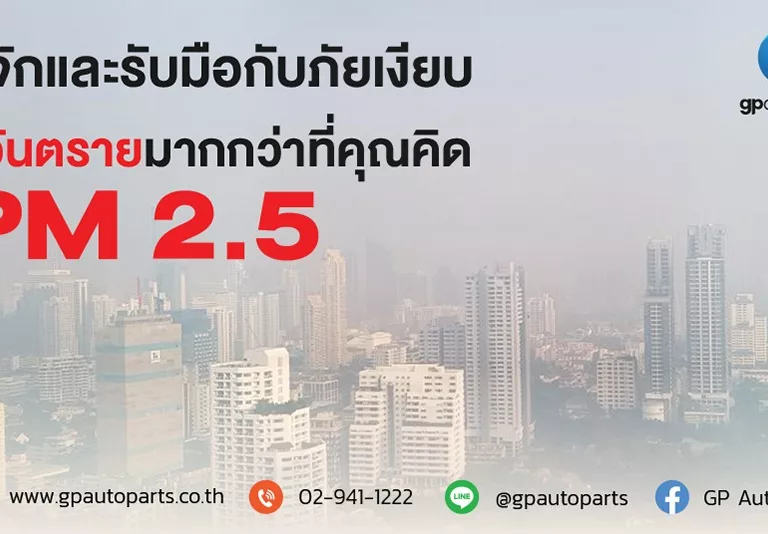
PM 2.5 refers to fine particulate matter, where “PM” stands for “Particulate Matter” or dust particles. The number 2.5 refers to the size of the particulate matter, which measures no more than 2.5 microns in diameter. To put this in perspective, 2.5 microns is about 1/25th the width of a human hair. This tiny size makes PM 2.5 particles so small that the nose hair, which acts as a filter, cannot block them. Because of their small size, PM 2.5 particles float in the air along with water vapor, smoke, and gases. This allows them to easily enter the respiratory system, bloodstream, and other organs in the body. Additionally, they can carry harmful substances on their surfaces, such as mercury, heavy metals, and carcinogens. These substances can cause significant harm to the body. Causes of PM 2.5 Pollution Wildfires, waste burning, and open-field agricultural burning, such as burning sugarcane fields and weeds. Smoke from industrial processes and dust from construction activities. Emissions from transportation and vehicles, including exhaust fumes and incomplete combustion in engines. Power generation, such as burning petroleum and coal. Everyday human activities, such as smoking, burning incense and candles, paper burning, and using photocopiers.           According to the Department of Pollution Control, it is stated that over 60% of the hazardous PM2.5 originates from diesel engines that burn incomplete fuel, resulting in black smoke and particulate matter.          Additionally, around 35% comes from open burning of waste and construction activities. Warning Signs That PM 2.5 Is Affecting You! If you think PM2.5 isn’t dangerous and is just another type of dust, think again. Due to its incredibly small size, PM2.5 can easily enter your body and severely impact your health. In extreme cases, exposure to this toxic dust can even be fatal. Let’s look at some symptoms indicating that you might be affected by this harmful dust. 1. Red eyes, swollen eyelids, dark under-eye circles, and frequent tearing. 2. Skin eruptions such as bumps or rashes that are red and spread across the skin. 3. Itchy, burning, or congested nasal passages, accompanied by clear nasal discharge. 4. Coughing, sneezing, and a feeling of tightness in the chest. 5. Fever or feeling unusually warm. In the initial stages of exposure to PM2.5, you might not notice significant effects. However, prolonged and continuous exposure to these fine particles can lead to serious long-term health impacts, both internally and externally. Slow brain development, attention deficit Allergies and asthma: Individuals already allergic to dust will experience aggravated symptoms Potential development of severe diseases such as lung cancer, ischemic heart disease, and pneumonia Burning pain on the skin; severe cases may cause hives on the face, joints, and groin Damage to skin cells, leading to weak, easily wrinkled skin Prolonged exposure to PM2.5 during pregnancy can negatively impact the fetus How to Live Away from PM 2.5 We cannot predict when the issue of fine particulate matter like PM2.5 will be resolved. The control measures seem too overwhelming for ordinary citizens. Therefore, what we can do is take care of ourselves, protect ourselves, and avoid behaviors that contribute to the generation of PM2.5. 1. Close doors and windows to prevent dust from entering your home. 2. Avoid exercising or doing heavy work outdoors, especially for patients or those with weak health; they should stay indoors unless absolutely necessary. 3. Drink plenty of clean water to help flush out impurities from your body. 4. Quit smoking; this not only reduces pollution but also strengthens your body. 5. Refrain from burning trash, especially toxic waste like plastic and tires. 6. Maintain your vehicle regularly to prevent pollution, such as changing the engine oil. 7. Replace your car’s air filter to ensure it can filter out dust and pollutants from entering the cabin. 8. Always wear a protective mask when you go outside. However, since PM2.5 particles are very small, regular paper masks are not effective. It is necessary to use thicker masks (N95). Summary PM2.5 is a type of particulate matter that has severe health impacts and tends to occur annually. Currently, Thailand cannot completely eliminate these pollutants. Therefore, we must protect ourselves and avoid behaviors that contribute to pollution. Most importantly, always wear a mask capable of filtering PM2.5 when leaving the house. This not only protects you from harmful dust but also reduces the risk of contracting various infections. Thank you for the information from: https://allwellhealthcare.com ___________________________________ Place an order/Become a distributor. GP MOBILITY PUBLIC COMPANY LIMITED Line id: @gpautoparts or Link Contact: https://www.gpmobility.co.th/contact-us/ Follow me: https://linktr.ee/gpmobility Service Monday to Saturday from 08:30 AM to 05:30 PM. 02-941-1222 (Auto),02-579-2882
GP Mobility Named Official Mobil™ Lubricants Distributor in Eastern Thailand

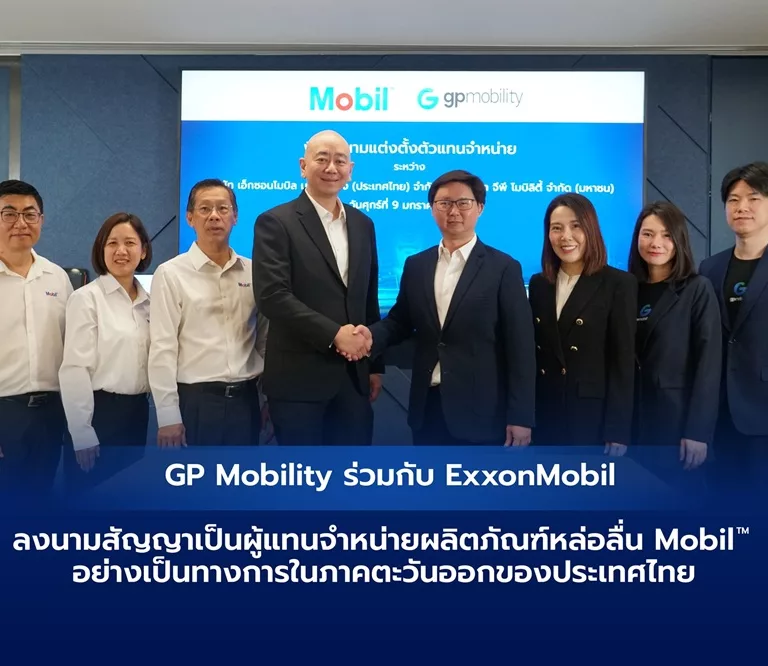
GP Mobility Public Company Limited has been officially appointed by ExxonMobil Marketing (Thailand) Co., Ltd. as an authorized distributor of Mobil™ lubricants, covering the Eastern region of Thailand. This collaboration marks a significant milestone in GP Mobility’s strategy to expand its world-class product portfolio. Through this partnership, local parts retailers, auto repair shops, service centers, and end-users will gain easier and more convenient access to premium, internationally recognized lubricants. Official Appointment Signing Ceremony The signing ceremony was held on January 9, 2026, at ExxonMobil Thailand Headquarters, Harindhorn Building, North Sathorn Road, Bangkok. Key executives from both organizations were present for the signing: Mr. Klao Haocharoen, Director and Sales Manager, ExxonMobil Marketing (Thailand) Co., Ltd. Mr. Kaweesin Sirimanitham, Chief Executive Officer, GP Mobility Public Company Limited This ceremony marked the beginning of a strategic partnership aimed at strengthening the distribution network of Mobil™ lubricants across Thailand, with a key focus on the Eastern region. Coverage Area: 7 Key Provinces in Eastern Thailand GP Mobility will be responsible for distributing Mobil lubricants in the following provinces:Samut Prakan, Chonburi, Rayong, Chachoengsao, Chanthaburi, Sa Kaeo, and Trat. Customers in these areas can be confident in receiving genuine Mobil products, supported by fast distribution and a team that understands the local market deeply. Mobil™: A Global Leader in Lubrication Technology Mobil is a globally recognized lubricant brand known for its cutting-edge engine protection technology. Its products help reduce friction, minimize wear, and effectively manage engine heat — making them ideal for Thailand’s driving conditions. 🔧 GP Mobility Offers the Full Range of Mobil Products: Mobil 1™ – Advanced full synthetic motor oil for premium performance Mobil Super™ – Reliable protection for everyday driving Mobil Delvac™ – Heavy-duty engine oil for trucks, commercial vehicles, and industrial use From family cars to pickup trucks and commercial fleets — GP Mobility is ready to serve every need. Learn more about Mobil™ products     

Car Ownership Transfer: Documents, Procedures, and Costs You Should Know

Required Documents, Process, and Fees You Should Know Buying or selling a used car—or transferring a vehicle to a family member—will only be legally complete once the ownership transfer has been officially recorded and the new owner’s name is updated in the vehicle registration book. Many people worry that the process may be complicated, but in fact, if all required documents are prepared correctly, the transfer can usually be completed within half a day at the Department of Land Transport (DLT). Types of Car Ownership Transfer A car ownership transfer is the legal process of changing the registered owner of a vehicle from one person to another. Understanding the transfer methods and preparing the correct documents in advance will help ensure a smooth and efficient process. Currently, there are two main types of car ownership transfer in Thailand: Direct Transfer Floating Transfer 1. Direct Transfer A Direct Transfer occurs when both the seller (transferor) and the buyer (transferee) go together to the Department of Land Transport to complete the ownership transfer on the same day. This method is considered the most secure and transparent. Required Documents for Direct Transfer Vehicle Registration Book (Blue Book) – Original Copy of National ID Card of both transferor and transferee, signed and certified Copy of House Registration of both parties (may be required in some cases) Sales Contract / Receipt / Tax Invoice as proof of sale Application for Transfer and Acceptance Form, fully completed and signed by both parties Power of Attorney Letter (if one party cannot attend in person), with stamp duty affixed and a copy of the authorized person’s ID card 2. Floating Transfer A Floating Transfer is when the seller does not personally attend the transfer process. Instead, the seller signs the necessary documents and grants power of attorney to the buyer, who then completes the transfer at the Department of Land Transport independently. This method is popular because it saves time for the seller. Required Documents for Floating Transfer Vehicle Registration Book (Blue Book) – Original Original Sales Contract Copy of National ID Card of the seller, signed and certified (at least 2 copies) Copy of National ID Card of the buyer Car Ownership Transfer Fees The Department of Land Transport charges the following fees for car ownership transfer: Application fee: 5 THB Ownership transfer fee: 100 THB Stamp duty: 0.5% of the vehicle’s assessed value, or 500 THB per 100,000 THB of assessed value Vehicle inspection fee: Approximately 50 THB (especially for vehicles older than 7 years) Some locations may charge around 200–300 THB New license plate fee: 200 THB (if requesting new plates) New registration book fee: 100 THB (in case of a damaged or replacement book) Steps for Car Ownership Transfer at the Department of Land Transport Car ownership transfer at the DLT requires proper document preparation and adherence to official procedures, whether using a direct or floating transfer method. Step-by-Step Process 1. Prepare All Required Documents Before visiting the DLT, ensure all documents are complete, such as: Vehicle registration book (original) National ID cards of both parties Copies of house registrations Sales contract or receipt Transfer application form (downloaded and filled in advance) Power of attorney letter (if applicable) Additional documents if required (e.g., inheritance documents) 2. Visit the Department of Land Transport Go to the DLT office where the vehicle is registered Inform the staff that you wish to transfer vehicle ownership 3. Submit Documents and Pay Fees Submit documents for verification Pay all applicable fees, including transfer fees, inspection fees, and registration book fees 4. Document and Vehicle Inspection Officials will verify document accuracy Vehicle inspection may be required in some cases Receive receipts and confirmation documents 5. Wait for the New Registration Book Once approved, the DLT will update the ownership details The new registration book is typically issued within 1–2 weeks, depending on the location 6. Verify the Registration Book Check all details carefully once received Keep the registration book and documents in a safe place Additional Tips Double-check all documents before visiting the DLT to avoid delays If using a power of attorney, always attach a signed copy of the grantor’s ID card Prepare sufficient funds in advance and bring cash or a debit/credit card as required by the DLT office Reference:Department of Land Transport (DLT), Thailand

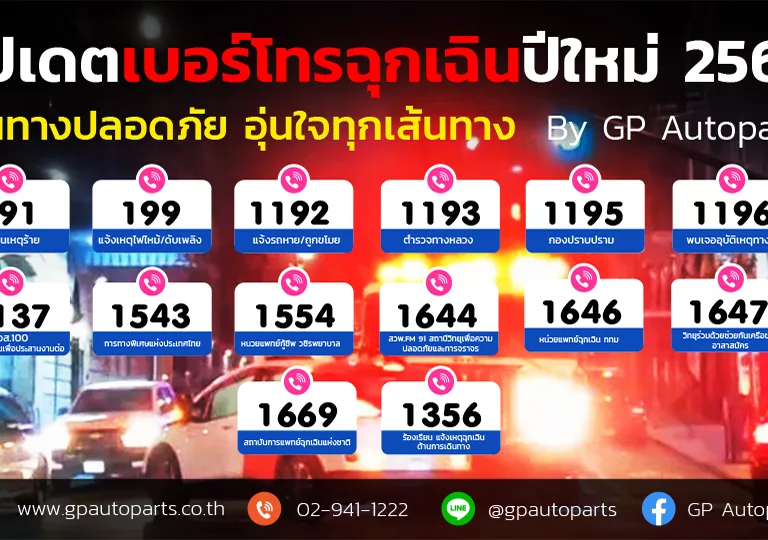
📞 Update Emergency Contact Numbers for New Year 2025! 🚨 Travel Safely and Sta Every Route with GP Autoparts.

Update Emergency Contact Numbers for New Year 2025! Travel Safely and Stay at Ease Every Route by GP Autoparts Emergency Contact Numbers for Travel: 1543 – Expressway Authority of Thailand 1193 – Highway Police 1155 – Tourist Police (Report emergencies or crimes involving tourists) 1644 – SWP FM91 Safety and Traffic Radio Station 1690 – State Railway of Thailand 1146 – Department of Rural Roads 02-134-4077 – Tourist Assistance Center (TAC) Having these emergency contact numbers on hand will help you quickly reach the relevant authorities in case of unexpected events during your travels. Wishing everyone a safe journey this New Year! ___________________________________ Place an order/Become a distributor. GP MOBILITY PUBLIC COMPANY LIMITED Line id: @gpautoparts or Link https://bit.ly/3fO3YMO Contact: https://www.gpmobility.co.th/contact-us/ Follow me: https://linktr.ee/gpmobility Service Monday to Saturday from 08:30 AM to 05:30 PM. 02-941-1222 (Auto),02-579-2882
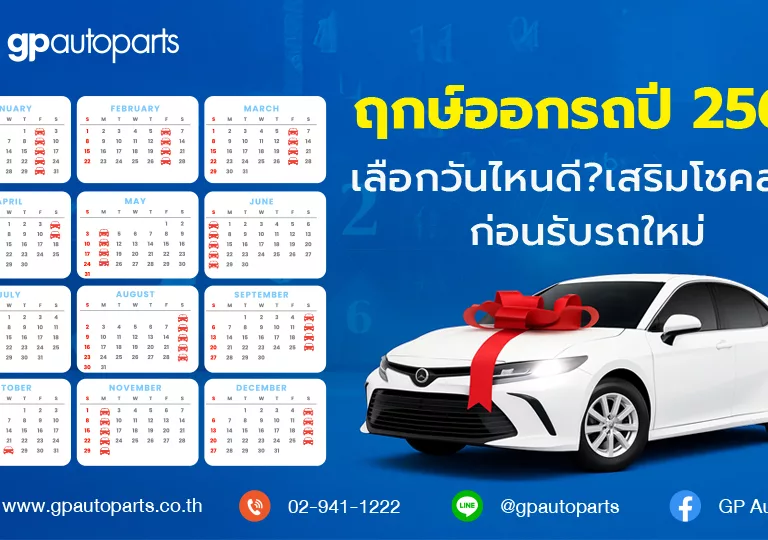
Auspicious Car Buying Dates 2026: Which Day Should You Choose for Good Luck?

Selecting an “auspicious date” (or Reuek Ok Rot) for picking up a new car is a belief that Thai people have held for generations. According to Thai astrology, choosing a “good day” helps enhance prosperity, attract good fortune, and, most importantly, provides peace of mind for safe driving throughout the year. This article summarizes the Auspicious Car Buying Dates for 2026 (B.E. 2569), along with the meanings of “Wan Mongkol” and “Wan Thong Chai,” helping you choose the perfect time to start your journey with your new vehicle. What are “Wan Mongkol” and “Wan Thong Chai” in Thai Astrology? Before looking at the calendar, it is essential to understand the types of lucky days used in these calculations: Wan Mongkol (Auspicious Day): These are days calculated by astrologers to be favorable for conducting important ceremonies or starting new ventures. It is believed that acting on these days enhances luck, wealth, and smoothness in life. Wan Thong Chai (Flag of Victory Day): This is considered the most auspicious day of the week or month. The word “Thong Chai” literally translates to “Flag of Victory.” It is believed to be the best day to start new things to ensure success, triumph over obstacles, and steady progress. Calendar of Auspicious Car Buying Dates for 2026 (Monthly) Here is the list of “Wan Thong Chai” (Victory Days) for each month in 2026, which are highly recommended for picking up your new car. January 2026 Lucky Dates: 2, 9, 16, 23, 30 January Meaning: Promotes prosperity, growth, and good fortune. February 2026 Lucky Dates: 6, 13, 20, 27 February Meaning: Excellent for wealth and flourishing trade/business. March 2026 Lucky Dates: 6, 13, 20, 27 March Meaning: Ideal for starting new businesses or ventures. April 2026 Lucky Dates: 3, 10, 17, 24 April Meaning: Enhances financial power and success. May 2026 Lucky Dates: 4, 11, 18, 25 May Meaning: Brings stability and safety to the owner. June 2026 Lucky Dates: 1, 8, 15, 22, 29 June Meaning: Promotes safety during travel and commutes. July 2026 Lucky Dates: 6, 13, 20, 27 July Meaning: Great for launching new enterprises or projects. August 2026 Lucky Dates: 1, 8, 15, 22, 29 August Meaning: Enhances prestige (Barami) and attracts support from others. September 2026 Lucky Dates: 7, 14, 21, 28 September Meaning: Suitable for investments and long-distance travel. October 2026 Lucky Dates: 5, 12, 19, 26 October Meaning: Ideal for travel and transportation. November 2026 Lucky Dates: 2, 9, 16, 23, 30 November Meaning: Boosts luck, fortune, and life stability. December 2026 Lucky Dates: 7, 14, 21, 28 December Meaning: Perfect for new beginnings and safe travels to end the year. The Best Time to Start Your Car Once you have picked the date, the specific time you start the engine and drive out of the showroom matters too. In Thai culture, the number 9 (Kao) sounds like the word for “moving forward.” Recommended Auspicious Times: 09:09 AM 09:59 AM Starting your journey at these times is believed to bring progress, advancement, and prosperity. Conclusion Selecting an auspicious date for buying a car is a personal belief that helps build morale and confidence for the driver. However, once you have received your new car, the most important factors are conscious driving, never being negligent, and regular vehicle maintenance to ensure safety on every journey. If you are looking for genuine, high-standard car parts and spares, don’t forget to think of GP Autoparts.

5 Apps to Check for Flooding!! Download Them Now

Flood Prevention and Preparedness In the midst of flooding in several provinces, many people need to closely monitor flood news. Prevention and preparedness for flooding, as well as checking the current water situation, are crucial at this time. We have compiled a list of excellent apps to help you stay updated on the flood situation. Here are some recommended apps that you should download to keep handy. # 1. ThaiWater: Monitor Water Situations This application is designed for tracking water situations using data from the National Water Resources Database, managed by the Hydro-Informatics Institute (Public Organization) under the Ministry of Higher Education, Science, Research, and Innovation. Key Features of ThaiWater: Overall Water and Weather Situation: Provides summary information on water and weather conditions, including storm situations, rainfall over the past 24 hours, water levels in river basins, reservoir water levels, and a 3-day forecast of rain and waves in the Gulf of Thailand. Rain Feature: Displays the amount of rainfall in different areas of the country. You can view a map showing rainfall across the nation. Water Level Feature: Shows water level data from various measuring stations. When you select a station, you’ll see a graph displaying water levels for the past 3 days and the last 24 hours, including both the water surface and bank levels. Reservoir Feature: Provides information on reservoirs across Thailand. You can view details on reservoir capacity, stored water, inflow, and outflow for each reservoir. # 2. DPM Reporter: All-Round Disaster Alerts The DPM Reporter app is developed by the Department of Disaster Prevention and Mitigation (DDPM) under the Ministry of Interior. It enhances public access to timely disaster alerts, improving the ability to anticipate, adapt, and recover from disasters swiftly and sustainably. This app delivers disaster situation updates to the public through smartphones via private and public channels. It also facilitates rapid communication between users and administrators. Key Features of DPM Reporter : Disaster News Function : Reports current disaster situations in the country through photos, video clips, and detailed descriptions of various disasters. Disaster Alert Function : Collects all types of disaster alerts and provides daily summaries of disaster information. News Reporting Function : Allows users to participate by reporting disaster situations themselves. News Map Function : Provides advance nationwide disaster alerts through a mapping feature. Disaster Statistics Function: Compiles data on disasters, covering yearly, monthly, weekly, and daily occurrences. # 3. WMSC: Daily Water Situation Reports and Reservoir Data The application, developed by the Water Management and Hydrology Bureau in collaboration with the Information Center, aims to provide updates on water situations and agricultural areas via mobile devices. Daily water situation reports, reservoir data, rainfall data, port water data, water situation monitoring cameras, agricultural information from the Royal Irrigation Department, and social network integration. # 4. DWR4THAI is an application that provides news and information services from the Department of Water Resources. The app provides news and information services from the Department of Water Resources. It reports water situations to link data from existing water resource information systems. It presents data, news, and electronic services. It features enhanced display of surveillance report data for monitoring water situations 24/7, and a menu for various water hazard alerts. Interesting features include: – Enhanced display of surveillance report data for monitoring water situations 24/7. – Water hazard alert menu: Adds declaration date information and color-coded hazard status to align with the surveillance operating system and early warning system for various water and land slide hazards. – Department of Water Resources projects menu: Adds detailed project information for each regional water resources office. # 5. RainViewer: Storm Alerts and Weather Conditions Viewer RainViewer is an all-in-one radar weather app that forecasts where storms are moving, tracks rain, snow, or any other storms on an online radar map. It also provides timely rain alerts. Interesting features include: – Real-time radar weather map – Weather alerts notification – Tracking storm paths on the weather map and storm conditions over the past 48 hours – Graphs forecasting future rainfall, showing intensity and rainfall amounts in the next hour in your area – Rainfall amount graph indicating when rain starts and stops Hopefully, these features will be beneficial to everyone in situations where staying informed is crucial for timely preparedness. These apps are available for download on both Android and iOS platforms. Thank you for the information from: bangkokassets ___________________________________ Place an order/Become a distributor. GP MOBILITY PUBLIC COMPANY LIMITED Line id: @gpautoparts or Link Contact: https://www.gpmobility.co.th/contact-us/ Follow me: https://linktr.ee/gpmobility Service Monday to Saturday from 08:30 AM to 05:30 PM. 02-941-1222 (Auto),02-579-2882
EV Battery Life: How Long Do They Last & What’s the Replacement Cost? The Complete Guide

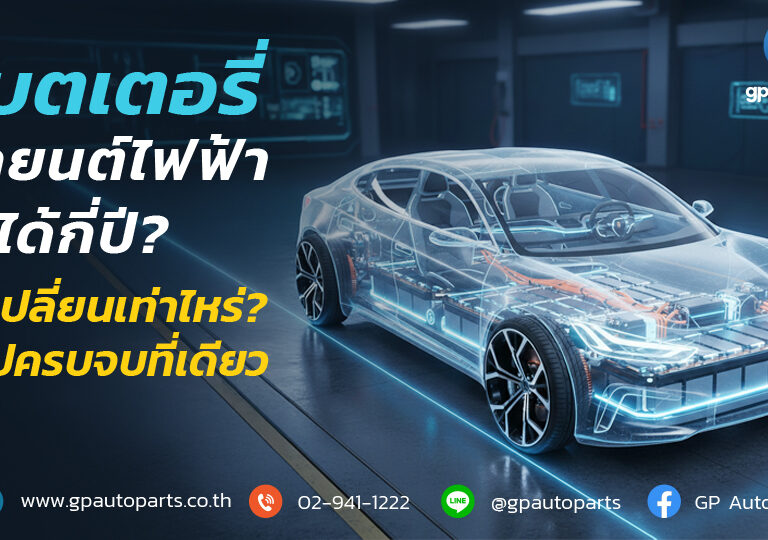
One of the top concerns for anyone considering an electric vehicle (EV) is the battery. It’s the heart of the car and its most expensive component. Even as technology continuously improves to extend battery life and reduce degradation, two questions remain: “How long does an EV battery really last?” and “If it needs replacing, how much does it cost? EV Battery Lifespan and Types The most important thing to understand is that an EV’s main battery doesn’t “die” suddenly like a traditional 12V car battery. Instead, it “degrades” over time and with use, meaning its ability to hold a full charge gradually decreases. Types of Batteries 1. Lithium-ion Battery This is the most popular battery technology in modern electric cars due to its high efficiency, light weight, and high energy density. There are two main types used today: Lithium Iron Phosphate (LFP) Battery Lifespan: 3,000 – 4,000 charge cycles (approximately 10-15 years) Pros: High safety (difficult to ignite), very durable, lower cost (does not use cobalt). Cons: Lower energy density (results in a heavier/bulkier battery). Used in: BYD (all models), Tesla (Standard Range models), MG (newer models), NETA. Lithium Nickel Manganese Cobalt (NMC) Battery Lifespan: 1,000 – 2,000 charge cycles (approximately 8-12 years) Pros: High energy density (allows for a lighter battery and longer range). Cons: Higher cost (uses cobalt), lower thermal stability compared to LFP. Used in: Tesla (Long Range models), Hyundai IONIQ 5/6, Kia EV6, most European EVs. 2. Lead-Acid Battery The main role of a Lead-Acid battery in an EV is to be the “12V auxiliary battery.” It powers the car’s standard electronic systems like lights, wipers, and the radio. It’s often called the “small battery” and is the same type used in conventional gasoline cars. Lifespan: Approximately 1.5 – 3 years (just like a normal car battery). Estimated Price: 2,000 – 4,000 Baht (depending on the model and brand). 3. Nickel-Metal Hydride (NiMH) Battery This technology was once popular in some electrified vehicles, especially Hybrid Electric Vehicles (HEV). While Lithium-ion has now replaced it in modern Battery Electric Vehicles (BEV), NiMH still plays a significant role in the hybrid market. Lifespan: Approximately 8-10 years or 100,000-200,000 kilometers. Estimated Price: 50,000 – 90,000 Baht. 4. Sodium-ion Battery This is an emerging technology still in development and testing for wider use in the near future. It focuses on safety, low cost, and durability in various environmental conditions. Estimated Lifespan: Expected to be around 10-15 years, which would help make EVs more durable and reduce long-term costs. Summary of EV Battery Replacement Costs Battery Type                                       Estimated Replacement Cost (Baht)                 Role in Vehicle Lithium-ion (Li-ion)                               300,000 – 800,000+                                                      Main Propulsion Battery (BEV) Nickel-Metal Hydride (NiMH)             50,000 – 90,000                                                             Main Propulsion Battery (Hybrid – HEV) Lead-Acid                                                  2,000 – 4,000                                                                  12V Auxiliary Battery (All cars) Sodium-ion                                               No price yet (Future technology)                                 (Future) Main Propulsion Battery Although the price of replacing the “entire pack” still seems high, it is steadily decreasing (as seen in price reductions from various car manufacturers). Furthermore, in the future, maintenance may not mean “replacing” the whole pack, but rather “repairing” it by replacing only the specific modules that have degraded, which will significantly reduce costs.

The auspicious time to release new cars in November 2025

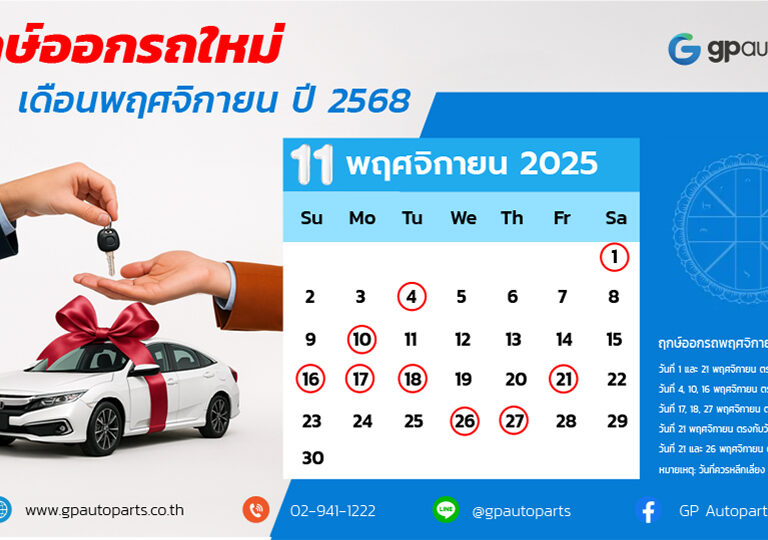
What is the best day to release a car? The matter of auspicious days and auspicious times is a belief deeply ingrained in Thai culture, extending to various aspects of life, including the release or purchase of a new car. Many owners of new cars, especially those with red license plates, attach great importance to auspicious car release dates for personal prosperity. However, the auspiciousness of a car release date may vary depending on individual beliefs. Generally, an auspicious car release date serves as a source of encouragement and inspiration for new car buyers more than anything else. Today, let’s update the auspicious days for car releases in November 2025, to help ensure luck and steer clear of potential dangers. Let’s explore which days are considered favorable for car releases this month. Saturday, 1 November 2025 Auspicious Significance: Corresponds to Chai Chok (Day of Victory and Success). Best Times: Morning 08:09 AM – 10:49 AM | Afternoon 01:09 PM – 03:09 PM (Prohibition: Forbidden for people born on Thursday. Avoid this day, as the good fortune will be nullified.) Tuesday, 4 November 2025 Auspicious Significance: Corresponds to Sitti Chok (Day of Accomplishment and Fulfillment). Best Times: Morning 08:09 AM – 09:49 AM | Afternoon 01:09 PM – 03:09 PM (Prohibition: Forbidden for people born on Wednesday (daytime). Avoid this day, as the good fortune will be nullified.) Monday, 10 November 2025 Auspicious Significance: Corresponds to Sitti Chok (Day of Accomplishment and Fulfillment). Best Times: Morning 08:09 AM – 10:49 AM | Afternoon 01:09 PM – 03:09 PM (Prohibition: Forbidden for people born on Tuesday. Avoid this day, as the good fortune will be nullified.) Sunday, 16 November 2025 Auspicious Significance: Corresponds to Sitti Chok (Day of Accomplishment and Fulfillment). Best Times: Morning 08:09 AM – 10:19 AM | Afternoon 01:09 PM – 03:09 PM (Prohibition: Forbidden for people born on Monday. Avoid this day, as the good fortune will be nullified.) Monday, 17 November 2025 Auspicious Significance: Corresponds to Maha Sitti Chok (Day of Great Accomplishment and Success). Best Times: Morning 08:09 AM – 10:49 AM | Afternoon 01:13 PM – 03:36 PM (Prohibition: Forbidden for people born on Tuesday. Avoid this day, as the good fortune will be nullified.) Tuesday, 18 November 2025 Auspicious Significance: Corresponds to Maha Sitti Chok (Day of Great Accomplishment and Success). Best Times: Morning 08:01 AM – 09:49 AM | Afternoon 01:00 PM – 02:39 PM (Prohibition: Forbidden for people born on Wednesday (daytime). Avoid this day, as the good fortune will be nullified.) Friday, 21 November 2025 (Special Auspicious Day) Auspicious Significance: A triple-luck day! Corresponds to Chai Chok (Victory), Amrita Chok (Perpetual Fortune/Immortality), and Racha Chok (King’s Fortune / Charisma). Best Times: Morning 08:25 AM – 09:09 AM | Afternoon 01:09 PM – 03:09 PM (Prohibition: Forbidden for people born on Sunday. Avoid this day, as the good fortune will be nullified.) Wednesday, 26 November 2025 Auspicious Significance: Corresponds to Racha Chok (King’s Fortune / Charisma / Power). Best Times: Morning 08:00 AM – 12:00 PM | Afternoon 01:39 PM – 05:00 PM (Prohibition: Forbidden for people born on Saturday. Avoid this day, as the good fortune will be nullified.) Thursday, 27 November 2025 Auspicious Significance: Corresponds to Maha Sitti Chok (Day of Great Accomplishment and Success). Best Times: Morning 08:00 AM – 11:11 AM | Afternoon 01:39 PM – 05:00 PM (Prohibition: Forbidden for people born on Friday. Avoid this day, as the good fortune will be nullified.) Getting a new car is exciting, but don’t forget to regularly check and maintain your vehicle. If you need genuine car parts with complete stock availability without waiting for long, make sure to choose “GP Auto Parts. Note: Dates to Avoid According to the auspicious calendar for this month, the dates that should be avoided for a new car purchase are November 3, 9, 15, 24, and 30, 2025. Choosing an auspicious date for a new car is a personal belief intended for peace of mind and encouragement. Once you have your new car, remember to always drive safely, mindfully, and perform regular vehicle maintenance. And if you need genuine, high-quality auto parts, don’t forget to think of “GP Autoparts”.

What’s the Difference Between Por Ror Bor (Compulsory Motor Insurance) and Annual Car Tax in Thailand? (Updated 2025)

For every car owner in Thailand, renewing Por Ror Bor (Compulsory Motor Insurance) and paying the annual car tax are mandatory yearly responsibilities However, many people still confuse the two, thinking they are the same This article will clearly explain the key differences, updated with the latest information for 2025. Por Ror Bor (Compulsory Motor Insurance) – Protects People Por Ror Bor refers to the Compulsory Motor Insurance Act, which requires every registered vehicle in Thailand to have this coverage. Coverage: Provides financial protection for victims of road accidents, including medical expenses, funeral costs, and compensation for drivers, passengers, and third parties. Renewal: Must be renewed annually. Without it, vehicle owners cannot renew their annual car tax and may face fines. Proof: Policyholders receive a Por Ror Bor insurance policy document, issued by an insurance company as legal proof of coverage. Annual Car Tax (Car Registration Sticker) – Covers the Vehicle The annual car tax is a government fee that every car owner must pay once a year to legally use their vehicle on public roads. Purpose: The collected tax is used to maintain and improve Thailand’s road infrastructure, bridges, and transportation systems. Validity: Each payment covers 1 year (365 days) from the date of renewal. Owners can renew up to 90 days in advance before expiration. Proof: Once payment is completed, owners receive a car tax sticker, which must be displayed on the vehicle. Penalty: If the tax is not renewed for more than 3 years, the vehicle registration will be suspended, requiring re-registration and possible backdated fines. Required Documents (for Private Cars) Vehicle registration book (or a certified copy) Valid Por Ror Bor insurance certificate (not expired) Vehicle inspection certificate (from an authorized inspection center – Tor Ror): Cars over 7 years old Motorcycles over 5 years old Where to Renew Annual Car Tax Department of Land Transport (DLT) offices nationwide Walk-in or book an appointment via the DLT Smart Queue app Online via DLT e-Service: https://eservice.dlt.go.th/ Thailand Post Offices: Submit documents and pay at any nearby post office Counter Service: Available at 7-Eleven and other partnered convenience stores Shopping Malls: Through the program “Shop Thru for Tax” Summary: Por Ror Bor = Protects people (mandatory insurance, required to renew car tax) Car Tax = Legal fee for the vehicle (annual government tax, proof via sticker) Both must be renewed every year to ensure that your car remains legal, safe, and compliant on Thai roads.