MAZDA.e

TAG – A hub for news, updates, situations, analysis, testing, and useful insights, as well as a platform for sharing product information.

กฎหมายจราจรอัปเดตใหม่ 16 9 2

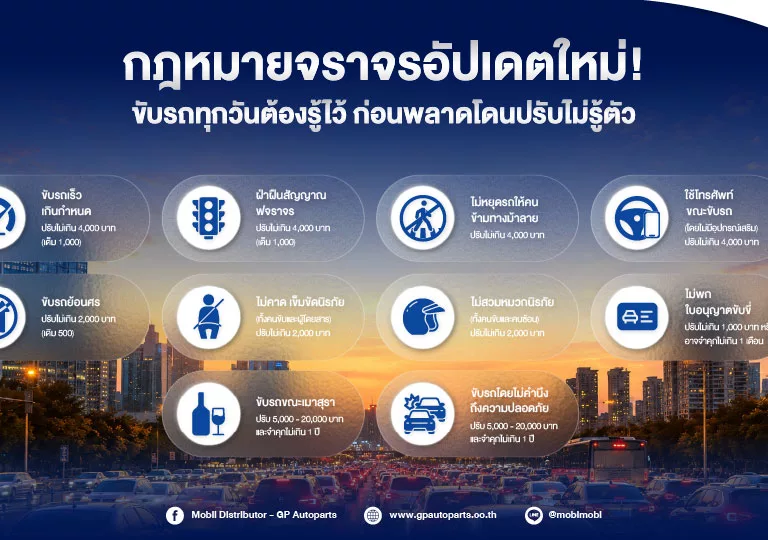
2026 Traffic Laws: 10 Major Offenses Subject to Strict Enforcement from April 1

2026 Traffic Laws: 10 Major Offenses Subject to Strict Enforcement from April 1 From April 1, 2026 onward, road users should exercise greater caution as the Royal Thai Police ends its “warning before fine” measure and begins stricter enforcement of major traffic offenses considered key risk factors for road accidents. The main objective is not simply to avoid fines, but to reduce road casualties and help everyone reach their destination more safely. 10 Major Traffic Offenses to Watch Out For The penalties stated above represent the maximum fines or penalty ranges publicized by government agencies. Actual charges and penalties may vary depending on the circumstances of each case. Key Safety Points Drivers Should Pay Special Attention To 1. Do Not Let Being in a Hurry Lead to Risky Driving Speeding, running red lights, or driving against traffic may save only a small amount of time but can significantly increase the risk of an accident. Plan your journey in advance, allow extra time for traffic, and always follow the posted speed limits. 2. Keep Your Phone in a Mount, Not in Your Hand Before driving, set your navigation route, music, or hands-free calling system in advance to reduce distractions. Taking your eyes off the road for even a few seconds can lead to an unexpected accident. 3. Seat Belts and Helmets Are Essential for Everyone Drivers should always wear their seat belts, and passengers should do the same. For motorcycles, both riders and passengers should wear properly certified helmets every time they travel. 4. Don’t Drink and Drive — It Is the Safest Choice After consuming alcohol, do not drive. Use public transportation, a ride-hailing or taxi service, or ask someone who has not been drinking to drive instead. The risk is not limited to fines or legal penalties — it also involves your own life and the safety of everyone else on the road. A Simple 30-Second Vehicle Check Before You Drive In addition to following traffic laws, making sure your vehicle is road-ready is equally important. Check these five points before every journey: Tires — Make sure tire pressure is correct and the tread is not excessively worn or cracked. Braking System — The brake pedal should not sink excessively, and there should be no unusual noise or vibration. Lighting System — Check that the headlights, taillights, brake lights, and turn signals are all working properly. Windshield Wipers — Make sure they clear water effectively without leaving streaks, especially during rainy weather. Safety Equipment — Make sure seat belts, helmets, and required driving documents are ready and available. Follow the Law — and Make Sure Your Vehicle Is Ready Traffic laws help maintain discipline on the road, while regular vehicle maintenance helps drivers stay in control with greater confidence. GP Autoparts encourages everyone to inspect their vehicle before travelling and drive responsibly to help make every journey safer for you and everyone sharing the road. Drive Responsibly. Stay Disciplined. Keep Your Vehicle Ready. Share the Road Safely. Source: The Royal Thai Police stated that the “warning before fine” measure ended on March 31, 2026, with stricter enforcement beginning on April 1, 2026. Government agencies have also publicized lists of key traffic offenses and their corresponding penalty ranges for public awareness.

E0B980E0B8ABE0B8A2E0B8B5E0B8A2E0B89AE0B980E0B89AE0B8A3E0B881E0B981E0B8A5E0B989E0B8A7E0B8A3E0B896E0B984E0B8A1E0B988E0B884E0B988E0B8ADE0B8A2 1

Why Does the Car Take Longer to Stop When Braking?

Why Does the Car Take Longer to Stop When Braking? Have you ever pressed the brake pedal and felt that the car takes longer to stop than usual, or that the braking distance has increased? These are not normal signs and should not be ignored. The braking system is one of the most important safety systems in a vehicle. Even a slight reduction in braking performance can increase the risk of an accident. Let’s Look at the Common Causes of Reduced Braking Performance 1. Worn Brake Pads Brake pads create friction against the brake discs to slow and stop the vehicle. Over time, they naturally wear down with use. As the brake pads become thinner, you may notice: Longer braking distances Reduced stopping performance Unusual noises while braking If the brake pads are allowed to wear out completely, they may damage the brake discs and lead to higher repair costs. 2. Worn or Warped Brake Discs Brake discs that are unevenly worn, warped, or deeply scored may reduce the contact area between the brake pads and discs, resulting in lower braking efficiency. Common symptoms include: Steering wheel vibration while braking Brake pedal vibration Reduced stopping performance 3. Deteriorated Brake Fluid Brake fluid transfers hydraulic pressure from the brake pedal to the braking system. Over time, brake fluid can absorb moisture from the air, which lowers its boiling point. During continuous heavy braking, such as: Driving downhill Long-distance driving Carrying heavy loads the braking system may experience brake fade, causing reduced braking performance and, in some cases, a softer brake pedal feel. Brake fluid should therefore be replaced according to the vehicle manufacturer’s recommended service interval. 4. Worn or Poor-Condition Tires Even if the braking system is working properly, worn tires, hardened rubber, insufficient tread depth, or incorrect tire pressure can reduce grip on the road. This may result in: Longer braking distances Increased risk of skidding Reduced vehicle control, especially on wet roads 5. Wet Roads or Rainy Conditions During rainy weather, water on the road reduces friction between the tires and the road surface, which can increase braking distance. For safer driving: Reduce your speed Increase the distance from the vehicle ahead Avoid sudden braking Make sure the tire tread is in good condition If you feel that your car takes longer to stop when braking, do not ignore it. The cause may be worn brake pads, damaged brake discs, deteriorated brake fluid, worn tires, or unfavorable road conditions. Regular inspection and maintenance of the braking system can help maintain reliable stopping performance and improve safety on every journey.

เหยียบเบรกบ่อยๆ 1

Does Frequent Hard Braking Affect Your Car?

Does Frequent Hard Braking Affect Your Car? Many drivers may have a habit of accelerating and braking repeatedly, or may need to brake hard frequently because of traffic conditions. Although the braking system is designed to stop the vehicle safely, repeated heavy braking can still affect various vehicle components over time. So, what happens to your car if you brake hard too often? Let’s take a look. 1. Brake Pads Wear Out Faster Hard braking creates greater friction between the brake pads and brake discs. As a result, the brake pads can wear faster than under normal driving conditions. If this driving behavior occurs regularly, the brake pads may need to be replaced sooner than expected. 2. Brake Discs Build Up More Heat Heavy braking causes brake disc temperatures to rise quickly. If this happens repeatedly, excessive heat may contribute to disc distortion, surface damage, or cracking over time. This may also cause vibration or pulsation when braking. 3. Brake Fluid May Deteriorate Faster Heat generated by the braking system can transfer to the brake fluid. Repeated exposure to high temperatures may accelerate fluid degradation. If the brake fluid is not properly maintained, braking performance may be affected and driving risk may increase. 4. Suspension and Tires Carry Greater Loads During hard braking, the vehicle’s weight shifts toward the front. This places additional load on the shock absorbers, suspension joints, and tires. Frequent heavy braking may therefore contribute to faster wear of these components. 5. Unnecessary Fuel Consumption Repeatedly accelerating and then braking wastes energy and can increase fuel consumption compared with smoother driving and anticipating traffic conditions ahead. How to Reduce Hard Braking and Extend Brake System Life Maintain a safe following distance Anticipate traffic conditions ahead Slow down early instead of braking suddenly Regularly inspect the brake pads, brake discs, and brake fluid Choose quality braking components that meet proper standards Occasional hard braking may not cause immediate problems. However, if it becomes a regular driving habit, it can accelerate wear on the brake pads, brake discs, brake fluid, suspension, and tires, resulting in higher maintenance costs. Smooth driving and regular brake system inspections can help improve safety and extend the service life of your vehicle. Brembo — Premium Products from a Global Leader in Braking Systems from Italy

อย่าให้รถพังกลางฝน เช็ก 5 ระบบสำคัญก่อนลุยฝน New

2026 Rainy Season Car Checklist: 5 Essential Systems to Check Before You Travel

2026 Rainy Season Car Checklist: 5 Essential Systems to Check Before You Travel The rainy season is one of the most challenging times for driving. Slippery roads, reduced visibility, and flooded areas can all increase the risk of accidents. Checking your vehicle before setting off is therefore not just about convenience — it is about the safety of you and the people you care about. This article brings together a 5-system checklist you should inspect before driving in the rainy season, along with practical tips to help make every journey smoother and safer. 1. Visibility System: Essential for Rainy-Season Driving When heavy rain reduces visibility, being able to clearly see the road becomes one of the most important factors for safe driving. Windshield Wipers — Test the wipers to make sure they clear the windshield smoothly without streaks or scraping noises. If the rubber becomes hard, cracked, or leaves water marks behind, replace the blades immediately. Wiper blades generally last around 6–12 months. Windshield Washer Fluid — Keep the reservoir filled and choose a washer fluid that can help remove grease, dirt, and insect residue to keep the windshield clear throughout the journey. Defogging System — Test the front and rear defoggers to make sure they work properly. High humidity during the rainy season can cause windows to fog up easily. Windshield and Mirrors — Keep all glass surfaces and side mirrors clean, and check for cracks or damage that may obstruct visibility. 2. Tires and Brakes: Key to Safety on Wet Roads On wet and slippery roads, tires and brakes are two of the most important systems determining whether your vehicle can stop safely and remain under control. Tire Tread — Check the tread depth. If it is below 3 mm, the tire’s ability to disperse water may be significantly reduced, increasing the risk of aquaplaning and loss of vehicle control. Tire Pressure — Inflate the tires according to the manufacturer’s recommended pressure, usually shown on the driver-side door pillar. Avoid driving with underinflated tires, as this can affect handling and road grip. Spare Tire and Tools — Check the condition of the spare tire and make sure the jack and wheel wrench are ready for use. Braking System — Test the brakes to make sure they respond firmly, without unusual noises or vibration. If anything feels abnormal, have the brake pads and discs inspected before travelling. Using quality brake pads and brake discs that meet proper standards can provide greater confidence when braking on wet roads. 3. Lighting and Signal Systems During heavy rain or nighttime driving, vehicle lights do more than help you see — they also help other road users see you. Check both low-beam and high-beam headlights Check all turn signals, brake lights, reverse lights, and fog lights Test the hazard warning lights to make sure they work properly for use during an emergency stop 4. Fluids and Engine Systems A properly maintained engine is the foundation of a reliable journey. Make sure all essential fluids are at the correct levels before setting off. Engine Oil — Check the oil level and service interval. High-quality engine oil helps protect the engine under a wide range of driving conditions. Coolant / Radiator System — Check that the coolant level is within the recommended range to help prevent overheating, especially when stuck in slow-moving traffic during heavy rain. Battery — Check the terminals for corrosion and make sure the engine starts normally. During the rainy season, the battery may be under greater demand as the lights, windshield wipers, and air-conditioning system are often used at the same time. Cabin Air Filter — A clogged cabin filter may reduce airflow, contribute to window fogging, and affect air-conditioning performance. Replace it according to the recommended service interval to help maintain good air quality inside the cabin. 5. Emergency Equipment to Keep in Your Vehicle In addition to checking the vehicle itself, having basic emergency equipment on hand can help you respond more effectively to unexpected situations. Umbrella or raincoat Flashlight Battery jumper cables Glass-cleaning cloth Insurance and roadside assistance contact numbers In-car mobile phone charger Once your vehicle is ready, do not forget to prepare for the journey itself. Check the weather forecast and identify routes that may be at risk of flooding or landslides. Allow extra travel time and drive at a speed appropriate for the road and weather conditions. Keep enough fuel in the tank, as heavy rainy-season traffic may increase fuel consumption. Summary Spending just a few minutes checking your vehicle before travelling in the rainy season can significantly reduce risk and improve driving confidence. From visibility, tires and brakes, and lighting systems to engine fluids and emergency equipment, every part works together to help you reach your destination safely. If you need to replace or upgrade vehicle parts for the rainy season — including windshield wipers, brake pads, brake discs, shock absorbers, cabin air filters, or engine oil — you can explore quality products from leading brands at GP Autoparts, helping you stay prepared for safer journeys in all weather conditions.

ป้ายทะเบียนรถหาย

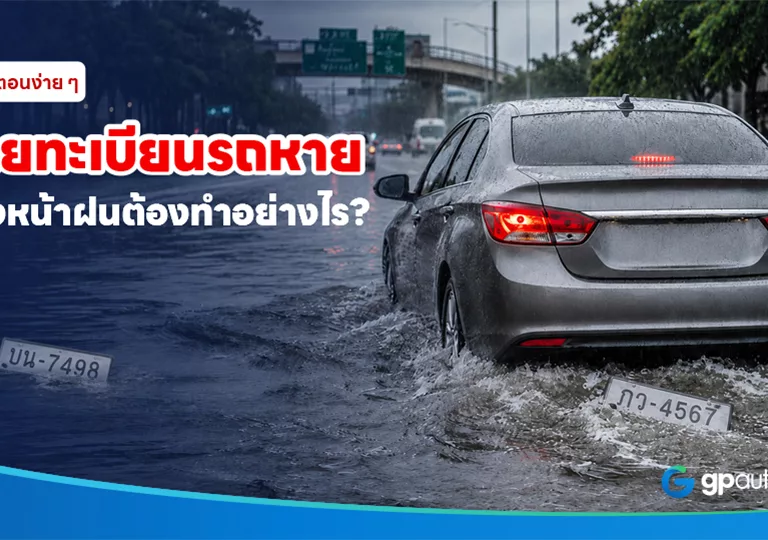
Simple Steps: What to Do If Your License Plate Is Lost During the Rainy Season

During the rainy season, one common problem drivers may face is a lost license plate, especially when driving through flooded roads. Strong water pressure can easily dislodge a plate that is not securely fastened and carry it away. If you suddenly discover that your license plate is missing, you may wonder what to do next and whether you need to file a police report. This article explains the process for requesting a replacement plate in simple, easy-to-follow steps. Do You Need to File a Police Report for a Lost License Plate? If a vehicle license plate is lost, the owner can request a replacement plate from the Department of Land Transport office responsible for that vehicle. According to the Department of Land Transport, a police report is not required. The replacement request should be submitted to the transport office responsible for the vehicle’s registration. Required Documents If the Vehicle Owner Applies in Person Original vehicle registration book Original national ID card of the vehicle owner If Someone Else Is Authorized to Apply Letter of authorization Copy of the vehicle owner’s national ID card Original national ID card of the authorized representative Original vehicle registration book If the Vehicle Is Under Finance Contact the finance company to obtain the required authorization documents Copies of the finance company’s documents as required by the transport office National ID card of the authorized representative Vehicle registration book or other documents provided by the finance company If the Vehicle Is Registered Under a Company Company registration certificate Copy of the national ID card of the authorized signatory Letter of authorization if another person is assigned to handle the application Steps to Request a Replacement License Plate 1. Check Which Transport Office You Need to Visit Go to the transport office where the vehicle is registered or the office responsible for the vehicle. You can check the province shown on the license plate or refer to the information in the vehicle registration book. 2. Request a Replacement License Plate Inform the officer that the license plate has been lost, complete the required application form, and provide details regarding the loss. 3. Submit the Required Documents Once all documents are complete, the officer will verify the vehicle and owner information. 4. Pay the Fees The application fee is 5 baht, and the replacement license plate fee is 100 baht per plate for cars, motorcycles, trucks, and buses. 5. Wait for the New License Plate A replacement plate generally takes approximately 15 days to produce. While waiting, keep the payment receipt or application evidence in the vehicle in case you are stopped or asked to provide proof by an officer. Main Costs for a Replacement License Plate Application fee: 5 baht Replacement license plate: 100 baht per plate Therefore, if one plate is lost, the estimated total cost is 105 baht. If both the front and rear plates are lost, the estimated total cost is 205 baht. Reference: https://shorturl.asia/I9Fuv Important: Do Not Make Your Own License Plate If your license plate is lost, do not write, print, or order a replacement from a general sign shop. Vehicle license plates are official government-issued identification plates. Using an incorrect or unauthorized plate may violate the law. Operating a vehicle without properly displaying the official license plate may result in a fine of up to 2,000 baht. If a plate is found to be counterfeit or an official document has been falsified, more serious penalties may apply under criminal law. Losing a license plate during the rainy season is relatively common, especially when driving through flooded roads or areas with strong flowing water. If your plate is lost, do not panic. Prepare the required vehicle and owner documents and contact the transport office responsible for your vehicle to request a replacement plate. While waiting for the new plate, always keep the payment receipt or application evidence in the vehicle. It is also a good idea to regularly check that the license plate screws and mounting points are secure to help prevent the plate from coming loose again. Sources: https://www.dlt.go.th/th/public-news/view.php?_did=2846 https://www.gcc.go.th

อย่าหยุดรถบนรางรถไฟ

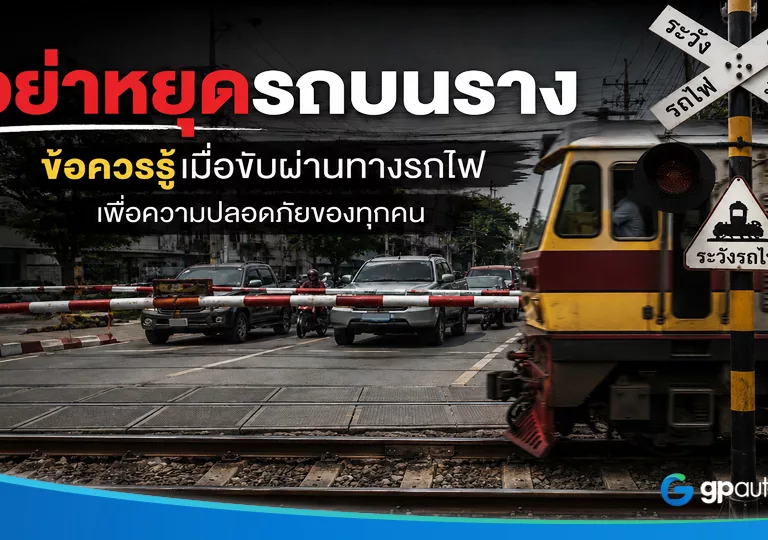
Carelessness at Railway Crossings Can Be Fatal — What Should You Do When Driving Across Railway Tracks?

Never Stop on Railway Tracks: What Drivers Need to Know for Everyone’s Safety The collision between a train and a bus in the Makkasan–Asok area, which resulted in multiple injuries and fatalities, was another tragic incident that brought renewed public attention to railway crossing safety. Many people may think of railway tracks as just another point along their daily route. In reality, railway crossings require a very high level of caution, because a mistake of only a few seconds can lead to a serious accident. Why Should You Never Stop on Railway Tracks? Railway tracks are not a place to park or wait for traffic to move. Whether you are driving a passenger car, pickup truck, commercial truck, or bus, entering the crossing when traffic ahead is blocked, the vehicle breaks down, or there is not enough space to move forward can leave the vehicle stranded directly in the path of a train. The most important rule is to make sure there is enough clear space beyond the tracks before crossing. If the vehicle ahead has not completely cleared the crossing or traffic on the other side has stopped, wait before the tracks — even if the warning lights or barriers have not yet been activated. What You Should Know When Crossing Railway Tracks 1. Slow Down Every Time You Approach a Railway Crossing When you see railway warning signs, flashing lights, hear warning signals, or notice crossing barriers, reduce your speed immediately and proceed with extra caution. The Department of Land Transport recommends always checking warning signs, audible signals, and flashing lights before crossing railway tracks. 2. Stop at a Safe Distance from the Tracks If you hear a warning signal or see that a train is approaching, stop at least 5 metres away from the railway tracks. Wait until the train has completely passed and there is a clear signal that vehicles may safely continue before proceeding. 3. Do Not Overtake Near a Railway Crossing The area approaching a railway crossing is a high-risk zone where overtaking should be avoided. Overtaking may block your view of an approaching train or warning signals and could leave your vehicle trapped on the tracks. The Department of Land Transport advises drivers not to overtake another vehicle within 30 metres of a railway crossing. 4. Do Not Follow the Vehicle Ahead Too Closely Many accidents happen because drivers follow the vehicle in front without checking whether there is enough space beyond the crossing. If the vehicle ahead stops suddenly or traffic becomes congested, your vehicle could be left stranded on the tracks. The safest approach is to wait until there is enough space for your entire vehicle to clear the tracks before moving forward. 5. If Traffic Is Congested, Do Not Force Your Way Across If traffic ahead is moving slowly or there is a possibility that you may have to stop on the tracks, remain behind the crossing. Do not assume that “traffic will move in a moment,” because unexpected delays can occur at any time, particularly during heavy traffic, rain, or poor visibility. What Should You Do If Your Vehicle Breaks Down or Gets Stuck on the Tracks? If your vehicle breaks down or becomes stuck on the railway tracks, the first priority is to stay calm and get everyone out of the vehicle immediately. Do not remain inside the vehicle trying repeatedly to restart it or fix the problem for too long, because trains require a much greater stopping distance than road vehicles. Once everyone is out of the vehicle, move away from the tracks to a safe location and contact the relevant authorities as quickly as possible. If railway crossing staff are present, notify them immediately so they can coordinate emergency action or help warn the approaching train. Every time you approach a railway crossing, remember one simple rule: “Do not cross unless you are certain you can clear the tracks completely.” Waiting just a few extra seconds can help prevent a loss that can never be undone. Road safety does not depend only on warning systems or railway staff. It also depends on the decisions made by every driver. Slowing down, stopping when necessary, and refusing to cross when conditions are unsafe are simple actions that can protect you, your passengers, and other road users. Railway crossings require extra caution whether they are located in urban areas or on rural roads. Before crossing, always look left and right, listen for warning signals, check the barriers, and make sure there is enough space ahead for your entire vehicle to clear the tracks safely. Because on the road, safety begins with staying alert. Most importantly: “Never stop on railway tracks — make sure it is safe before crossing.” Thank you to the information source: http://bit.ly/4uRpBwN

น้ำมันเครื่องเบนซิน ดีเซล ต่างกันยังไง

Gasoline vs. Diesel Engine Oil: What’s the Difference, and Can They Be Used Interchangeably?

Engine oil plays an important role in protecting the engine and extending its service life. However, many drivers still wonder how gasoline and diesel engine oils differ and whether one can be used in place of the other. This article explains the differences in simple terms so you can choose the correct engine oil safely and confidently. How Are Gasoline and Diesel Engine Oils Different? Although both are called “engine oil,” oils formulated for gasoline and diesel engines are designed to meet different operating conditions and performance requirements. Gasoline Engines Gasoline engines generally operate at higher engine speeds and tend to produce less soot than diesel engines. Their engine oils are therefore formulated with additives that focus on: Reducing Friction: Helps engine components move smoothly, especially at higher engine speeds. Heat and Oxidation Resistance: Helps protect the oil from breaking down under high operating temperatures. Suitable Vehicle Types: Eco cars, sedans, hatchbacks, gasoline-powered SUVs, and hybrid vehicles. Diesel Engines Diesel engines use compression ignition and typically operate under higher cylinder pressures. Their combustion process may also generate more soot, especially under heavy-load conditions. Diesel engine oils are therefore formulated with additives that focus on: Detergents and Dispersants: Help control deposits and keep soot suspended in the oil, reducing sludge and deposit formation. Anti-Wear Protection: Helps protect engine components operating under high loads and pressures. Suitable Vehicle Types: Pickup trucks, PPVs, diesel SUVs, vans, trucks, and commercial vehicles. Can Gasoline and Diesel Engine Oils Be Used Interchangeably? In general, it is not recommended to substitute one for the other unless the oil meets the specifications required by the vehicle manufacturer. Although both provide lubrication, their additive packages and performance standards may differ depending on the engine type and application. Using Gasoline Engine Oil in a Diesel Engine — Possible Risks If the oil does not meet the required diesel specification, it may not provide sufficient soot control, deposit protection, or wear protection. Over time, this can contribute to sludge formation, deposits, increased engine wear, and reduced engine performance. Using Diesel Engine Oil in a Gasoline Engine — Possible Risks A diesel-focused oil may not always meet the gasoline engine specifications required for emissions systems, fuel economy, low-speed pre-ignition protection, or other gasoline-engine requirements. Using an oil that does not meet the correct specification may affect engine performance, emissions-system durability, and long-term protection. The safest approach is to always check the viscosity grade and performance specification recommended in the vehicle owner’s manual, such as API, ILSAC, ACEA, or the vehicle manufacturer’s own approval.

ขึ้นเขาทำยังไงให้ระบบเบรกไม่มีปัญหา web 1

Mountain Driving: How to Keep Your Brakes Trouble-Free

When driving on mountain roads or long, steep grades, many drivers focus mainly on engine power, but the braking system is just as important—especially when descending. Improper braking can lead to brake fade, a burning smell from overheated brake pads, or even a significant loss of braking performance at a critical moment, increasing the risk of an accident. Here are some important techniques and precautions to help you drive safely on mountain roads while keeping your brakes performing effectively. Professional Mountain Driving Techniques Use a Lower Gear Select an appropriate lower gear to improve vehicle control and allow the engine to help manage speed, especially on downhill sections. This reduces excessive brake use and helps prevent brake overheating. Avoid Sudden Braking Reduce speed gradually and avoid hard braking at the last moment whenever possible. Repeated heavy braking can generate excessive heat and reduce braking performance. Watch for Signs of Brake Overheating Most passenger vehicles do not have a brake temperature gauge. Pay attention to warning signs such as a burning smell, reduced braking response, or an unusually soft brake pedal. If these occur, stop at a safe location and allow the brakes to cool. Allow the Vehicle and Brakes to Cool During long or demanding mountain drives, take appropriate breaks when needed. Allowing the engine and braking system to cool can help reduce the risk of heat-related brake problems. Using Engine Braking Engine braking is a useful and effective technique when driving downhill. Selecting an appropriate lower gear allows the engine to help control vehicle speed, reducing continuous use of the brake pedal and lowering the risk of brake overheating. Use engine braking together with controlled brake application whenever driving on long or steep downhill sections. Common Mistakes Using Too High a Gear on Steep Roads Using a gear that is too high, particularly when descending, reduces the engine’s ability to help control vehicle speed. This can lead to excessive brake use, overheating, and faster brake wear. Continuing to Drive with Overheated Brakes Continuing to use overheated brakes without allowing them to cool may significantly reduce braking performance and create a dangerous driving situation. Additional Recommendations Always inspect the braking system and overall vehicle condition before driving on mountain roads. Adjust your speed to road, traffic, and weather conditions, and avoid unnecessary acceleration. If you notice signs of brake overheating or reduced braking performance, stop in a safe location and allow the system to cool before continuing your journey.

7 ข้อ เช็คลิตส์ ก่อนเดินทาง 1

7-Point Brake Checklist for a Safe Songkran Trip

7-Point Brake Checklist for a Safe Songkran Trip Long-distance driving puts greater demand on the braking system, especially on steep roads, winding routes, and in heavy traffic. If the brakes are not properly maintained, braking performance may weaken, pedal feel may become inconsistent, or the system may overheat, increasing the risk of an accident. Here is a 7-point brake checklist before your trip that you can inspect yourself or discuss with a technician before setting off. 1. Brake Fluid Level Check the brake fluid reservoir and make sure the fluid level is between the MIN and MAX marks. If the level is too low, it may indicate brake component wear or a fluid leak. Have the vehicle inspected immediately. 2. Brake Fluid Color Fresh brake fluid is usually clear to light yellow. If it becomes cloudy, dark brown, or black, it may have been in use for too long or absorbed moisture. This can lower the boiling point and reduce braking performance. The fluid should be replaced as soon as possible. 3. Brake Pad Thickness Brake pads worn to less than 3 mm may reduce braking performance, cause excessive heat, or create noise during braking. If the pads are close to their wear limit, have them inspected and replace them as recommended by a qualified technician. 4. Brake Disc Surface Cracks, warping, or deep grooves on the brake discs may indicate heavy use or excessive heat buildup. These conditions can cause vibration, uneven braking force, and increase the risk of brake disc damage. 5. Unusual Braking Noise If you hear clicking, scraping, or grinding noises while braking, the brake pads may be excessively worn or foreign material may be trapped in the braking system. Have the brakes checked as soon as possible. 6. Brake Pedal Feel If the brake pedal feels unusually soft or sinks too far, there may be air in the system, low brake fluid, or worn brake system seals. These issues can reduce braking performance and increase the risk of brake overheating or an accident. 7. Inspection by a Qualified Technician If the brakes feel weak, the brake pedal feels soft, or the brake fluid has turned dark, do not ignore the warning signs. Have the system inspected and serviced before your trip by a qualified technician for maximum safety on the road. Checking your braking system before a long journey is more than just a routine inspection — it is an investment in the safety of you and your family. For greater peace of mind, choose high-quality brake fluid and braking components, and have your vehicle inspected by a trusted service center to help ensure a safe Songkran journey.